dimarts, 23 d’octubre del 2012
Alegria de l'aigua
Alegria de l'aigua que fa revenir els rius, que corre els camins, que fa volar ocells negres al cel petit dels bassals.
Alegria dels llamps que esquerden la crosta de la nit: si no fóssim vells i xarucs, xisclaríem de sorpresa!
Quins colors tan nets després del xàfec que s'ha endut la son dels camins.
Quina punta al coixí que fan les teranyines enjoiades.
Envernissats d'ara mateix, els bolets juguen a amagar-se i fan cara de sorpresa.
Les fulles que han caigut tenen un instant petit de perfecció que et voldries endur i preservar...
Els cargols-treu-banya surten lentament de la closca del temps.
diumenge, 21 d’octubre del 2012
Sie werden nicht fähig...
Solange die Regierung von Madrid uns nicht als Brüdern und Schwestern behandelt, wird das Unabhängigkeitsgefühl in Katalonien immer stärker werden, und die Machthaber werden nicht fähig sein, es zu stoppen...
Etiquetes de comentaris:
Escrits de Francesc Arnau i Arias.
"Sommerlügen" von Bernhard Schlink; Kommentäre über Amazons Rezensionen
.--Winfried Stanzick informiert uns, dass die Menschen im Buch keine materiellen Sorgen kennen und diese Tatsache ist für mich ein wenig negativ, weil das heisst, dass es in allen sieben Geschichten des Buches keinen Klassenkampf gibt. Immer ist der Klassenkampf ein wichtiger Teil der Realität...
.-- Ich unterstütze Birgit Sonnenblume am wenigstens in zwei Punkten: 1) Menschliche Erfahrung ist ein grosser Vorteil, den ältere Menschen haben, 2) das Leben fordert uns von Tag zu Tag zu Antworten auf.
Allerdings werde ich dieses Buch lesen.
Etiquetes de comentaris:
Escrits de Francesc Arnau i Arias.
ICH LERNE DEUTSCH...
Una biblioteca alemanya
Ich lerne Deutsch, weil ich die deutsche Literatur lesen will: Johann Wolfgang von Goethe, Friedrich Schiller, Friedrich Nietzsche, Günter Grass und tutti quanti...
Noch mehr: Meine bescheidene Erfahrung mit Fremdsprachen zeigt mir, dass je mehr man liest, desto besser kann man sprechen und schreiben lernen.
Außerdem habe ich herausgefunden, dass viele Bücher aus anderen mitteleuropäischen Ländern auch auf Deutsch übergesetzt sind. Zum Beispiel lese ich zurzeit eine Anthologie von sehr alten jugoslawischen Märchen, die vielleicht nicht in spanischer oder katalanischer Fassung existiert...
Etiquetes de comentaris:
Escrits de Francesc Arnau i Arias.
dimarts, 16 d’octubre del 2012
Fragilitats
La malaltia s'acosta als meus amics, darrerament, sigilosa.
I jo no els sé dir com els estimo.
Em desperto a la nit i hi penso, però no hi sóc, al seu costat.
Em desperto amb totes les petites xacres que em ronden i que potser no són tan petites o que, segur, seran més grans.
No sé dir-te fins a quin punt vas ser un nen lluminós, i sé que aquesta llum t'acompanyarà sempre, E.
No sé dir-te que des que et vaig conèixer, i fa tan poc, ja em va semblar que érem amics des de sempre, J.
No sé dir-te que la intensitat amb què vius et fa fort, M.
No sé dir-vos que la fragilitat és de tots, és nostra. Fragilitat del temps i del cos, fragilitat de la companyia dintre la solitud.
Ja sabeu on sóc...
dilluns, 15 d’octubre del 2012
Ciutat
Una ciutat desconeguda. Els carrers plens de cotxes rabents sembla que corrin a dessagnar-se en algun lloc remot, com si fossin artèries d'alguna bèstia viva.
Se m'acut refugiar-me en la verdor d'un parc, però quan miro amunt m'adono que les capçades dels arbres són d'un plàstic espès. Al terra, bolets de paper i deixalles.
Em fico en una casa fosca. Al capdavall, hi ha números il.luminats: una xifra gran, centenars de milers d'alguna cosa. Els números van canviant.
Ara baixo unes escales entortolligades, com una serp de pedra que es perd en la boira. Intueixo espadats a banda i banda. He d'arrribar, però el camí és tortuós, i porto un vestit de ferro que m'estreny i m'adoloreix cada racó de la pell.
divendres, 21 de setembre del 2012
CHARITY AND THE SYSTEM
Cues d'afamats a Nova York.
El text que segueix es una copia del comentari enviat al blog Left Side of the Road, administrat per un escriptor viatger, el senyor Michael Harrison, de Liverpool (UK).
Yeah, Michael, Charity
is the only answer to be expected from the System, by those who don't
dare to fight. This has been so for many years. I remember how
shocked I was the first time (1997) I was able to see myself the huge
numbers of people, queuing around churches in the Lower East Side of
Manhattan (NYC), at breakfast, lunch or dinner time, just to get some
warm food...
I was wondering, if I
myself became ashamed of seeing these images, what's the feeling of a
US citizen, who still has a job and a place to stay, at least. What's
the feeling of President Obama? I don't ask about the feelings of
Republican candidate Romney, because he has very clearly explained
them. The only thought Mitt Romney is able to have in front of the
hungry crowds, wandering all over the USA, is that they are just
parasites! And he is a millionaire! A real tycoon!
What a disgrace for the
so called American way of life, for him, for them, for the
churches, for the bishops, for the archbishops, for Obama, for us,
for everybody...!
Etiquetes de comentaris:
Escrits de Francesc Arnau i Arias.
dimecres, 19 de setembre del 2012
LA RAMBLA AND THE CIVIL WAR
Columna al front
El text que segueix es la copia d'un comentari enviat al blog Left Side of the Road, administrat per un escriptor viatger, el senyor Michael Harrison.
Hey Michael, your deep and pertinent comments about 'La Rambla' in Barcelona and the shame you can see at 1 am, during the night wandering the streets, reminded me of a conversation I had many years ago with a neighbour of mine in St. Adrià de Besòs (Barcelonès, Catalonia). He, Senyor Martínez, was an old man, close to his seventies and a veteran of the anarchist Durruti Column during the Spanish Civil War, in 1936-39.
He was complaining also about a certain shame in La Rambla, but in these terms:
You know, Francesc, what made me upset, when coming back from the Aragon front, after several weeks of fighting against the Fascists? This was the atmosphere in 'Les Rambles'. You could always see many people, taking walks happily and wearing firearms, but you could easily guess that some of them actually had never been to the front. There was not a clue of real commitment in their faces and manners... How could we count on this kind of people to win a war...? To permit such an unjust situation was an enormous error... And because of that and other serious errors we've lost... of course...!
Walking Les Rambles by night, right now, we see reasons to fear about the future and the prospects facing our young people. Certainly we can also remember some reasons to complain about in our past defeats... and to try and avoid the same errors happening...
Etiquetes de comentaris:
Escrits de Francesc Arnau i Arias.
dimarts, 18 de setembre del 2012
MEMÒRIA HISTÒRICA A LIVERPOOL
“Un moment de l'acte a Liverpool” (Foto de Michael Harrison)
Liverpool 15.- Fa molt de temps, quan jo era jovenet i no havien passat massa anys des de la Guerra Civil de 1936-39, semblava que aquells esdeveniments quedaven molt més llunyans en la Història que no pas ara, que ja estem al 2012. Segurament això era degut a com la gent en parlava. O millor dit, a com la gent no en parlava, perquè en aquells temps la gent normalment callava molt.
En canvi ara --almenys a mi em passa-- hi ha temes relacionats amb aquella guerra que, encara que no els busqui, els trobo. I segurament és això el que em situa ara molt més a prop d’aquella circumstància històrica. El que me n'allunyava també era la confusió provocada al nostre país arran de l’especial situació política que vàrem viure almenys fins al 1975.
No fa gaire anys vaig estar enraonant amb un veí de St. Adrià, de la mateixa generació del meu pare i, en un moment donat, em va dir: -“Doncs sí, el 1975, quan es va acabar la guerra…” Això em va sobtar i el vaig interrompre: -“Què dius que va passar al 1975?” – Aleshores se’n va adonar i va rectificar: “Ah perdona, vull dir quan va morir en Franco, al 1975…” Doncs això vull dir, quan dic confusió.
LA BANDERA REPUBLICANA
Avui, a la ciutat anglesa de Liverpool i més concretament a Hope Street, que és un carrer molt cèntric, que uneix la catedral protestant amb la catòlica, s’ha celebrat un homenatge als més de dos-cents veïns de la ciutat, que al 1936 varen venir voluntàriament a defensar la Segona República Espanyola, enfront del cop d’estat del general Franco.
El local en qüestió és una mena de centre cívic popular, que es diu “The Casa”. Només entrar ens trobem amb una bandera republicana espanyola, situada en un lloc de preferència, on comença l’exposició de fotografies dels anys trenta, totes referides als esmentats voluntaris anglesos. Ens costa entrar i circular perquè el lloc és molt concorregut. La gent està contenta; beuen cervesa i alguns es fan fotografies al costat de la bandera.
DEL RIU MERSEY AL RIU EBRE
Per Liverpool passa el riu Mersey, que en part és navegable i dóna nom a una gran conurbació, el Merseyside. Per això el títol que presideix aquesta exposició fotogràfica és “From the Mersey to the Ebro”. L'ha organitzada la “International Brigade Memorial Trust”, constituïda per tota una colla de gent militant. Alguns són descendents dels brigadistes; a hores d’ara ja no en queda, naturalment, cap de viu.
Penjats a les parets també hi ha pòsters explicatius, a més dels peus de foto que acompanyen cada quadre. Així se’ns informa que els dos-cents de Liverpool només són una part de la gran brigada anglesa, constituïda per més de dos mil cinc-cents voluntaris antifeixistes.
XOFERS, PALETES, MECÀNICS…
En un lloc d’honor hi ha la llista penjada: Atkinson, Blumdell, Carroll, Donnelly… alguns noms estan en tinta roja. Són els morts en combat. Al costat també hi ha el nom de la batalla i la data: Quinto, agost del 1937; Serra de Pàndols, agost del 1938; Ebro, juliol-novembre del 38; Casp, març del 38; Brunete, juliol del 37; Belchite, març del 38… I també hi consten els oficis o professions que tenien abans de marxar i que van continuar fent els qui varen poder tornar: xofer, paleta, mecànic, enginyer naval, estibador, mariner, professor d’universitat, ferrer, periodista, estudiant, pintor, fuster…
Veig una fotografia presa a bord d’un vaixell espanyol de guerra, el “destroyer” lleial a la República, que portava per nom “Alcalá Galiano”. Una altra al front de Madrid, al peu d’una bateria antitanc…
EL FILL DE LA CAYETANA
Al fons del local, hi ha una sala d’actes, on ens arrepleguem unes dues-centes persones, unes assegudes, d’altres dretes i gairebé totes grans. Es fan els parlaments. Feia temps que jo no sentia parlar de classe obrera i societat socialista davant de tanta gent. M’ha cridat l’atenció un home de més de setanta anys, que porta una insígnia del sindicat espanyol de la CNT i que ha criticat fortament la policia durant la seva intervenció. Segurament aquestes crítiques no són alienes al fet que aquesta mateixa setmana, a Londres, s’ha conegut un informe oficial, segons el qual tota la responsabilitat de les noranta-sis morts que varen haver-hi, durant un partit de futbol a l’estadi de Hillsborough, a Sheffield, el 15 d’abril de 1989, és de la policia.
Després vénen els càntics i els punys enlaire. La Internacional, Bandiera Rossa... i la confraternització durant el dinar popular que segueix l’acte. És aleshores quan se’ns acosta el senyor Jim Jump i Lozano, de 63 anys d’edat, fill d’un dels voluntaris de Liverpool, que es va casar amb una noia de La Rioja, la senyora Cayetana Lozano i Díaz. Aquest home també ha intervingut en els parlaments i, en acabar ha cridat un “Viva la República!” com el que, segons diu, havia sentit a cridar més d’una vegada al seu pare.
I amb tot això tinc la impressió que ara comprenc una mica millor què és el que va passar en aquella guerra, sense que això signifiqui, encara, que jo estigui en condicions d’analitzar per què es va perdre.
Etiquetes de comentaris:
Escrits de Francesc Arnau i Arias.
dissabte, 15 de setembre del 2012
Liverpool: el vent
Homenatge als brigadistes de Liverpool
El crush de Hillsboroug a Sheffield, 1989
En questio de minuts, pot obrir clarianes brillants al cel ennuvolat, per on el sol brilla indecis, entre sorpres i ensonyat. Pero tambe pot cloure rapidament un dia blau, estendre arreu un mantell gris i fosc que es pot descordar de sobte en una pluja violenta i fugac.
Pero hi ha hagut una altra mena de nuvol, molt feixuc, que ha planat vint-i-tres anys damunt la ciutat. Com diu Michael Mansfield al diari The Guardian" del 13 de setembre de 2012, "There has been a cloud hanging over us for 23 years and that has been lifted. Is is not a sense of joy but one of relief. This is one of the biggest moments on my life. I have had that weight upon me since I was 16".*
Fa vint-i-tres anys, hi va haver una fatidica topada entre seguidors de futbol a l'estadi de Hillsborough, a la ciutat de Shefifeld, durant la semifinal entre Nottingham Forest i Liverpool. (15 d'abril de 1989). Hi van morir 96 persones, entre les quals adolescents i nens. Els diaris de l'epoca van parlar de seguidors borratxos i sense entrada com a causants del desastre. Pero ara acaba de sortir un informe oficial en que s'explica que van ser la incompetencia de la policia i la manca de mesures de seguretat les causes directes del desastre.
I, justament avui, al cel de Liverpool s'ha obert una altra gran clariana. Hem tingut la sort de poder assistir a la inauguracio d'una exposicio de fotografies sobre els i les brigadistes d'aquesta ciutat (uns cent setanta-cinc) que van lluitar a favor de la Republica durant la guerra civil espanyola. Cap d'ells no era present a l'acte. Han mort tots; pero hi havia els seus fills i filles, els nets, les netes. Hem cantat plegats la Internacional, amb els punys enlaire, i hem escoltat les paraules que els va adrecar La Pasionaria a les darreries de 1938, a Barcelona:
"Sou historia. Sou llegenda. Sou l'exemple heroic de la solidaritat i la universalitat de la democracia".
De seguida que s'ha acabat l'acte, (durant el qual no hi hem pogut veure gent jove) pero, tothom ha comencat a menjar: tambe nosaltres. I hem tornat a semblar els burgesos que som.
Ha estat un miratge?
Quan hem sortit, el cel de Liverpool somreia. Un sol estantis que ha vagarejat una estona pels carrers de la ciutat. El vent dormia.
*Hi ha hagut un nuvol planant sobre nosaltres durant vint-i-tres anys que ara s'ha aixecat. No es un sentiment de joia sino d'alleujament. Aquest es un dels moments mes grans de la meva vida. He tingut aquest pes damunt meu des que tenia setze anys.
dilluns, 10 de setembre del 2012
La brasa viva del cel
El vell somni, sempre igual i sempre diferent.
Arribo a casa (és grisa i buida) i sento una criatura petita que plora. "Com he pogut oblidar-me'n?", penso, i corro a consolar-la.
La tinc als braços, obro la finestra. Crema en somort la brasa viva del cel. Una mica de vent de no-res l'abrandaria.
dissabte, 1 de setembre del 2012
Montserrat
Monestir de Montserrat
El post que segueix, sobre el Monestir de Montserrat, és una còpia del comentari enviat al bloc Left side of the road, administrat per un escriptor viatger, el senyor Michael Harrison de Liverpool (UK).
Hey, Michael, here I am with more historical remarks, this time about Montserrat.
I’m glad you emphasize that the Monastery of Montserrat has always been the place of many Catalan nationalist events, but we must also take into account that some of the political events, taking place in Montserrat, have aimed further than the Catalan nation.
For example, during 1969 the Spanish police arrested sixteen members of the ETA (Euskadi Ta Askatasuna - “Basque Country and Freedom”). General Franco’s regime planned to judge them in a military tribunal, under the accusation of having killed a policeman and committed other crimes. Not only in Spain but also internationally everybody was impressed by the number of defendants (sixteen) and the seriousness of the punishments: six death penalties and 752 years of imprisonment.
A vast anti-Franco campaign took place. Banned trade unions and parties (especially the well organised Partido Comunista de España - Communist Party of Spain) called for strikes in factories and universities and demonstrations throughout the country.
On the 1st of December 1970 the ETA kidnapped, in San Sebastián, a diplomat of the Federal Republic of Germany, Eugen Behil Schaeffer, threatening the Spanish Fascist Regime with killing him, if any of the death sentences against the Basque prisoners were executed.
In this context, on the 12th of December, three hundred Catalan artists and intellectuals decided to hold a meeting in the Monastery of Montserrat. They then published a manifesto demanding general political amnesty, democratic liberties and the right of self-determination, vowing to remain there until the issue was resolved.
Then, the West German authorities and big industrial bosses, who were at that time important suppliers, clients and investors in Spain, started to put pressure on Franco in order to avoid the carrying out of the death sentences. Otherwise it was clear that there would be economic sanctions. All this, plus the popular campaign, the international press and the final involvement of the Catholic Church in favour of the amnesty, succeeded in stopping the murderous intention of the Spanish Fascist Regime.
And the Monastery of Montserrat was a part of this historic circumstance.
Etiquetes de comentaris:
Escrits de Francesc Arnau i Arias.
Gràcia: La revolta de les Quintes, 1870
El post que segueix, sobre el barri de Gràcia, de Barcelona, és una còpia del comentari enviat al bloc Left side of the road, administrat per un escriptor viatger, el senyor Michael Harrison de Liverpool (UK).
Thank you, as always, Michael. Plus some historical remarks here.
The Vila de Gràcia is one of the most popular and active neighbourhoods of the city of Barcelona. Nowadays it gives the name to the Gràcia district, which includes, furthermore, the neighbourhoods of Vallcarca and Penitents, el Coll, La Salut, El Camp d’en Grassot and Gràcia Nova. In 2005 the population of Gràcia was 120,087 inhabitants.
Its most significant monument is the Belfry (el Campanari), which rises in the very middle of the Town Hall Square, where the district authority now meets.
The Vila de Gràcia was the principal centre of the ancient independent town of Gràcia. That town was composed from this nucleus and the agrarian area – mainly farms (masies) – of the Camp d’en Grassot.
The most remembered accomplishment of Gràcia’s people was in 1870, during the riots against the military drafts (La revolta de les Quintes). The siege of the brave neighbourhoods lasted six long days and nights when the army was confronted by the people when they tried to enter the streets.
The story of The Bell of Gràcia (La Campana de Gràcia) is very well known because by this means everybody was called to the barricades, each time the army showed up, by the end with heavy cannon.
Even today, during the Festa Major, you can see young people protesting against the Catalan or Spanish Government – it doesn’t matter about what, or who – just any injustice.
Etiquetes de comentaris:
Escrits de Francesc Arnau i Arias.
diumenge, 26 d’agost del 2012
Modernisme a La Garriga
El post que segueix, sobre el Modernisme a La Garriga, és una còpia del comentari enviat al bloc Left side of the road, administrat per un escriptor viatger, el senyor Michael Harrison de Liverpool (UK).
If it is true that “…Modernism was definitely a style of and for the rich…”, it is not less true that Modernism, precisely because “…it was a child of its time…” expanded into other human activities in addition to architecture. For example, literature. That’s why when we talk about Modernism here, in Catalonia, we find it very convenient to refer to one of the most respected Modernist Catalan poets , Joan Maragall (Barcelona, 10-10-1860 – 20-12-1911) and his “teoria de la paraula viva” (theory of the living word).
Many people here, in Barcelona and further afield, remember nowadays the events of the “Setmana Tràgica” in 1909 (the Tragic Week). At that time only very few people dared to oppose the death penalty, during the bloody and merciless repression that followed those events. Joan Maragall was one of them and he took a clear stance, far from the ‘snobism’ of certain intellectuals of that time who were just flirting with anarchist ideas. He wrote a very courageous article in October 1909, “La ciutat del perdó” (The city of forgiveness), which was strictly censored by the Spanish Government. Maragall tried, by these means, to defend the life of Francesc Ferrer i Guàrdia (Alella, Maresme, 10-01-1859 – Barcelona, 13-10-1909), who was about to be executed. In this same article he also exposed the serious responsibility of the Catalan bourgeoisie in those events… being himself a bourgeois.
Ferrer i Guàrdia was a very important Catalan educationalist, creator of the “Escola Moderna” (Modern School), a practical project of libertarian pedagogy. He was accused of having promoted rebellion during the 1909 events and was executed by firing squad, in October of the same year, in Montjuïc Castle.
“The Times” of London, after this execution wrote: “… By negligence or stupidity, the Government has confounded the freedom of education and conscience, the human right to reason and express ideas, with the right of opposition, assimilating it to a criminal unrest…”
For more information about Modernism in Catalonia, refer to a book, in Spanish, “El primer Modernismo literario catalán y sus fundamentos ideológicos”, Editorial Ariel, Barcelona 1973, by Eduard Valentí i Fiol (Pals, Baix Empordà, 1910 – 1971, Barcelona).
Etiquetes de comentaris:
Escrits de Francesc Arnau i Arias.
divendres, 24 d’agost del 2012
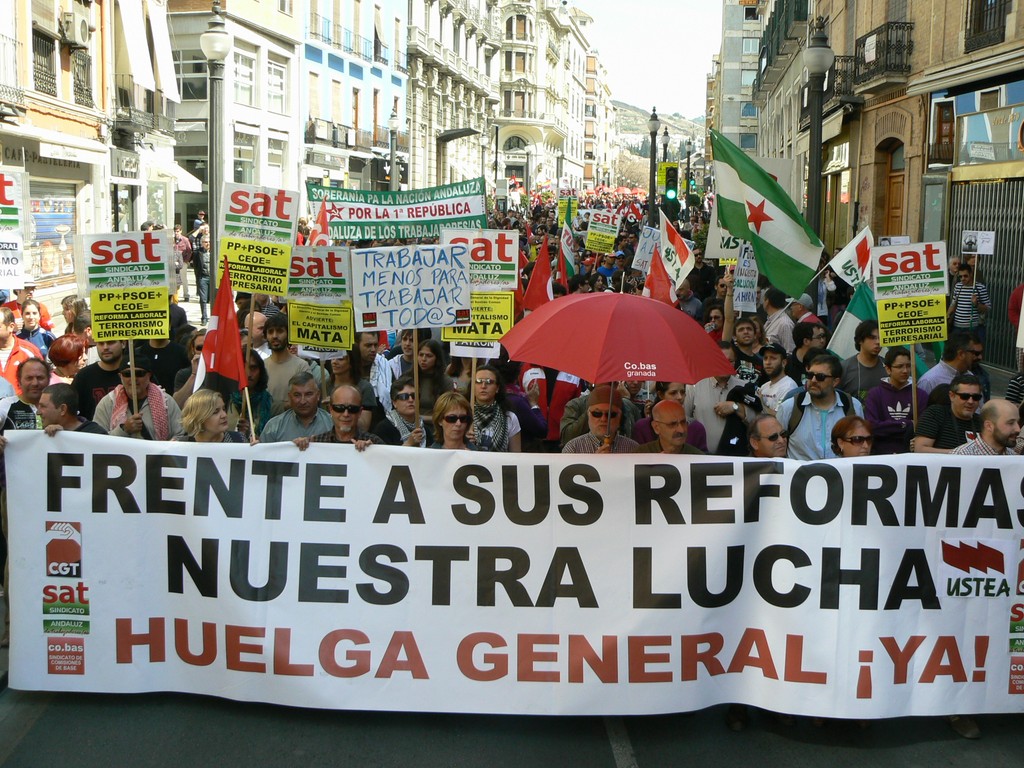
El Sindicat Andalús de Treballadors
El post que segueix, sobre el Sindicat andalús de Treballadors és una còpia del comentari enviat al bloc Left side of the road, administrat per un escriptor viatger, el senyor Michael Harrison de Liverpool (UK).
I’m afraid right now there is not enough freedom of speech in this Southern European country of ours, to dare to explain openly our sincere opinion about this direct action, carried out by the Andalusian jornaleros. Anyway, let’s receive your article as a precious sample of international solidarity. And to all of you: stay strong, go ahead. Forwards! Until we can establish real social justice…
Etiquetes de comentaris:
Escrits de Francesc Arnau i Arias.
L'aeroport de Rosanes
Un polikarpov de l'època
L'aeroport de Rosanes
Thank you for talking about interesting historical sites which have been forbidden to us during a very long post war period. Even the fact that you come from a distant European country, makes it more laudatory at our Catalan eyes…
Only a few remarks. The fact that Spain did not take part in the “big” war of 1939-45, can be explained in detail. Actually, the Nazi-fascist regime of General Franco took clear sides from the very beginning of the Second World War. They even sent an entire unit of about 45.000-47.000 infantrymen, who served inside the Wehrmacht , during 1941-43 period and treacherously attacked the Soviet Union. These were the “250. Einheit spanische Freiwilliger (Blaue Division)”, known in Spain as ”250 Unidad de Voluntarios Españoles (División Azul)”. Franco put in charge of this Division two prominent generals of the Spanish Fascist army: Agustín Muñoz Grandes and Emilio Esteban Infantes.
In addition to this very clear aggression against the Soviet Union, the Spanish Fascist police never ceased collaborating effectively with the German Gestapo (Geheime Staats Polizei), the secret police of Adolf Hitler, especially after the occupation of France by the Nazis. Both police forces murdered hundreds – if not thousands – of war refugees, because they were Jews (Walter Benjamin) or were prominent Spanish Republican officials (Lluís Companys) or simply because they had served in the Spanish Loyalist army from 1936-39.
Walter Benedix Schönflies Benjamin (Berlin 1892-Port Bou 1940), an eminent philosopher, professor and writer, a member of the Frankfurt School, was cornered on the French-Spanish border, while he was trying to flee to the United States and died there.
Lluís Companys i Jover (Lleida 1882-Barcelona 1940), President of the Autonomous Catalan Government, during the Spanish Second Republic, was arrested in Bretagne (France) by the Gestapo and delivered to the Spanish police, who tortured and murdered him. He was the only European President, democratically elected, who was shot by the Nazi-fascists during this “big” war.
Moreover, after the war, General Franco allowed Spain to serve as a safe haven for former German war criminals. For example, Otto Skorzeny (12 June 1908 – 5 July 1975) was an SS (Schutzstaffel)- Obersturmbannführer (Lieutenant Colonel) in the German Waffen-SS during World War II. After fighting on the Eastern Front, he was chosen as the field commander to carry out the rescue mission that freed the deposed Italian dictator, Benito Mussolini, from captivity.
But in spite of all that, at the end of the Second World War, the United States Government preferred to have a war criminal, like General Franco, as an unconditional ally than to fight against him to restore democracy in Spain.
Etiquetes de comentaris:
Escrits de Francesc Arnau i Arias.
Parc Güell
El post que segueix, sobre el Parc Güell, és una còpia del comentari enviat al bloc Left side of the road, administrat per un escriptor viatger, el senyor Michael Harrison de Liverpool (UK).
Park Güell
It’s good you are talking about Antoni Gaudí and issues in common amongst complaining tourists and residents near the park.
I wish to make only a historical remark. The first time Socialists took over Barcelona City Hall was in 1979. The first democratic elections after the Civil War were on the 15th of June 1977, but those were for the Parliament in Madrid. The second were in April ‘79 and those were also for the Parliament. And the third were also in April 79 and those, yes, were local and the so called Partit dels Socialistes de Catalunya (PSC-PSOE) won and governed the city until two years ago.
The reason the System prepared these political events following precisely this chronological order, is due to the fact that the post-Franco Regime – after General Franco’s death in 1975 – well remembered the grand father of King Juan Carlos, Alfonso XIII, who was thrown off his throne just because the Spanish people had voted massively and overwhelmingly for the Republican parties in local polls, on the 14th of April 1931 and then,the next day, the Second Spanish Republic was proclamed.
Etiquetes de comentaris:
Escrits de Francesc Arnau i Arias.
dimecres, 22 d’agost del 2012
Santa Margarida
Malgrat l'onada de calor, quedem a les vuit del matí per pujar a Santa Margarida de Vinyoles, un dels llocs emblemàtics de la meva infantesa, que feia anys i panys que no havia visitat.
Sembla mentida que puguem pujar sense sol, sota la fageda que, tot i eixuta, conserva encara la frescor del verd transparent.
En arribar, la carena de la muntanya se'ns obre com una flor, al mig de la qual l'ermita se'ns apareix com el pistil de pedra de la flor oberta.
I no ens cansem de mirar el paisatge estès, onades de verdor de boscos i, al lluny, la sanefa blava de les muntanyes diluïda en la calitja.
diumenge, 19 d’agost del 2012
Camí de libèl.lules
Vas venir i ens vas portar de dret cap a l'aigua. En un dia de calor xardorosa, la riera encara era freda sota la volta verda dels arbres, i vam seure amb els peus a l'aigua, just on les arrels vermelles xuclaven la humitat.
I llavors va començar l'espectacle de les libèl.lules: una de petita amb un verd iridescent; l'altra negra, l'altra un esclat de blau lluminós. Volant arran de l'aigua o quieta a contrallum d'una fulla ampla, cadascuna va subratllar els petits moments de la trobada.
Tota la llum pretèrita de les estrelles feta perfecció i miracle.
dijous, 16 d’agost del 2012
Subscriure's a:
Missatges (Atom)